

How to Optimize Dental Service Pages for Google
Oct 22, 2026


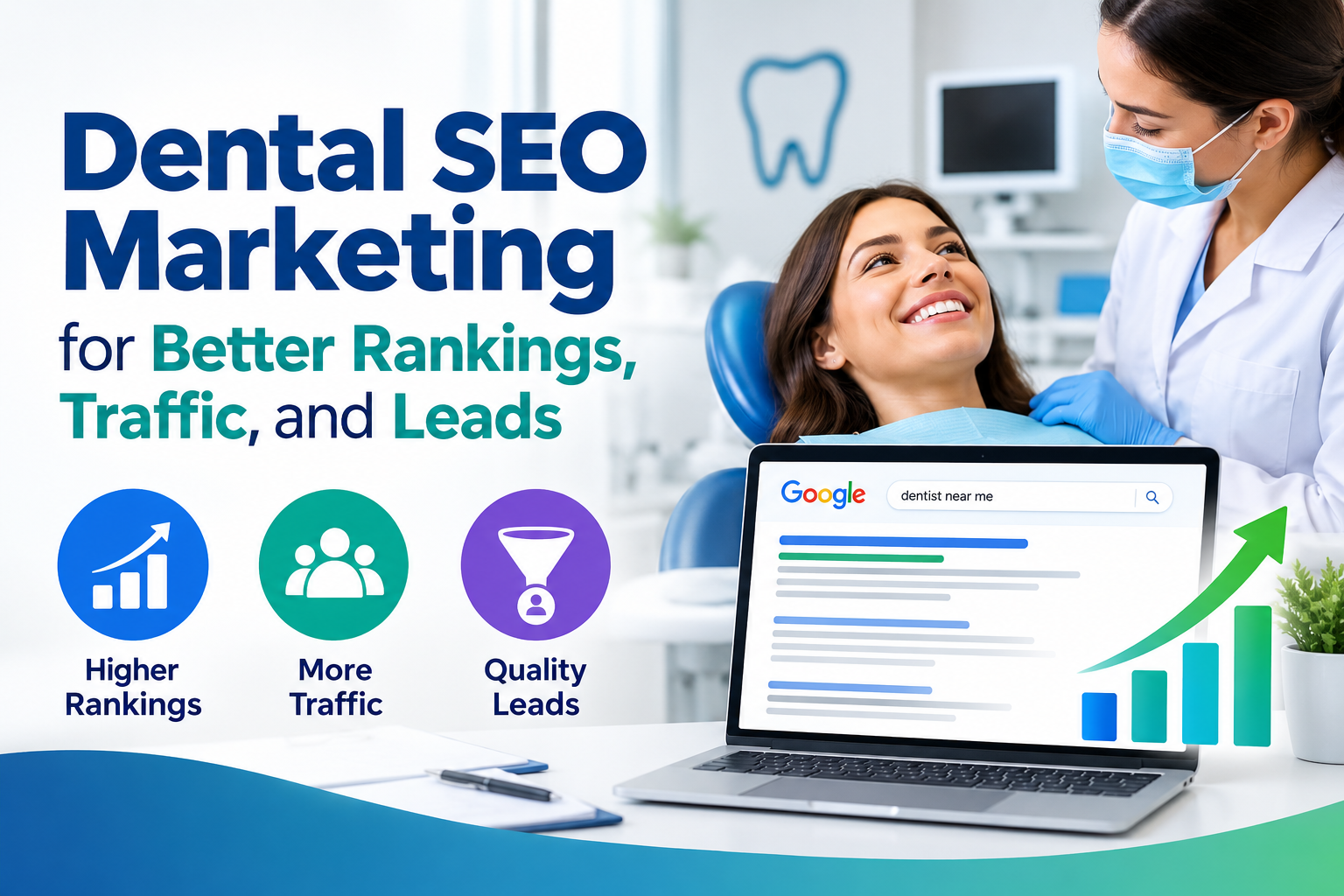
A strong online presence has become essential for dental practices that want to attract new patients consistently. When people need a dentist, they often begin with a Google search for services such as dental implants, teeth whitening, braces, root canal treatment, emergency dentistry, or a dentist near their location. If your practice does not appear prominently for these searches, potential patients may choose a competitor instead.
This is where Dental SEO Marketing can make a meaningful difference. A well-planned search strategy helps dental websites become more visible, attract relevant visitors, build credibility, and turn search traffic into appointment enquiries. Rather than focusing only on rankings, effective SEO connects your website with people who are actively looking for the treatments and services your practice provides.
Dental marketing is highly competitive, particularly in areas where several clinics serve the same communities. Patients can compare practices within seconds by checking search results, reviews, services, locations, and websites.
Search visibility therefore plays an important role in the patient journey. A clinic appearing on the first page for relevant searches has a better opportunity to receive website visits, phone calls, direction requests, and appointment enquiries.
Modern Dental SEO Marketing focuses on matching a practice with the specific searches that potential patients make. Instead of relying on one broad keyword such as “dentist,” a strategy can target treatment, location, and intent-based searches. Examples include “root canal dentist near me,” “dental implants in [city],” “kids dentist near me,” and “teeth whitening clinic in [area].”
One of the most important parts of dental SEO is creating useful pages for individual treatments. A general services page may not provide enough information to compete for searches related to specific procedures.
Dedicated pages can explain treatments such as dental implants, orthodontics, root canals, cosmetic dentistry, preventive care, wisdom tooth removal, and emergency dental services. Each page should clearly explain the procedure, potential benefits, preparation, aftercare, frequently asked questions, and how patients can schedule a consultation.
Treatment-focused content also helps visitors make informed decisions. When a page answers the questions patients are already asking, it can increase both search relevance and engagement.
Most dental practices depend heavily on patients from nearby areas. This makes local SEO particularly important.
Google’s local results are influenced by factors such as relevance, distance, and prominence. A complete and accurate Google Business Profile can help a practice appear for location-based searches, while consistent business information across relevant online directories helps establish a reliable digital presence.
Your practice should maintain accurate details for its name, address, phone number, opening hours, services, website, and appointment information. Location-specific website content can also help connect your practice with searches from the communities you serve.
Dental websites should provide more than promotional information. Educational content can attract people earlier in the decision-making process.
For example, a dental practice could publish articles answering questions such as:
This type of content can bring in visitors searching for answers and introduce them to your practice before they are ready to book. It also creates opportunities for internal links between blog articles and relevant treatment pages.
Getting visitors to a website is only part of the goal. The website must also provide a smooth experience.
A dental website should load efficiently, work properly on smartphones, have clear navigation, use readable content, and make important information easy to find. Appointment buttons and phone numbers should be visible without forcing visitors to search through multiple pages.
Technical SEO also involves areas such as crawlability, indexing, page structure, metadata, internal linking, structured data, and website performance. Fixing technical problems allows search engines to understand and access important pages more effectively.
For dental practices, trust is especially important because healthcare content requires strong signals of expertise and reliability. Clear practitioner information, accurate treatment information, professional credentials, and transparent contact details can help establish confidence with prospective patients.
Backlinks remain an important part of building website authority, but quality matters more than simply collecting a large number of links.
A dental practice can build relevant visibility through reputable healthcare directories, professional organizations, local publications, community websites, partnerships, educational resources, and genuinely useful content that other websites want to reference.
A thoughtful link-building strategy can strengthen a website’s authority while also helping potential patients discover the practice through trusted external sources.
Ranking well does not automatically generate new patients. Your website needs to guide visitors toward taking action.
Strong calls to action can encourage visitors to call the clinic, request an appointment, complete an enquiry form, or learn more about a specific treatment. Contact information should be easy to locate across the website.
This is where Dental SEO Marketing becomes closely connected with conversion optimization. The objective is not simply to increase the number of visitors but to attract people with genuine treatment intent and provide them with a clear path to becoming patients.
If your dental practice needs a structured approach to improving search visibility, you can explore Dental SEO Marketing services designed around rankings, relevant traffic, and lead generation.
Successful SEO should be measured using meaningful business metrics rather than rankings alone. Dental practices can monitor organic traffic, keyword visibility, Google Business Profile interactions, phone calls, appointment requests, landing-page performance, and conversions.
It is also useful to identify which services generate the most valuable enquiries. If searches for dental implants generate more appointments than general informational searches, future content and optimization efforts can give greater attention to implant-related topics.
Regular reporting makes it easier to understand what is working and where additional improvements are needed.
SEO is not a one-time marketing activity. Search behavior changes, competitors publish new content, search engines update their systems, and websites require ongoing maintenance.
A consistent strategy should include technical monitoring, content development, local SEO management, reputation building, internal linking, authority development, and performance analysis. Over time, these activities can create a stronger digital foundation for the practice.
Effective Dental SEO Marketing combines visibility with relevance and trust. When your website provides useful information, your local presence is accurate, and your pages are built around real patient searches, your practice has a stronger opportunity to attract qualified visitors and convert them into enquiries.
Dental SEO Marketing is the process of improving a dental practice’s website and online presence so it can appear more prominently for relevant search queries. It typically includes local SEO, technical optimization, content creation, treatment-page optimization, reputation management, and authority building.
SEO can connect your practice with people actively searching for dental treatments. When optimized pages appear for relevant searches, visitors can reach your website, learn about your services, contact your clinic, and request appointments.
Yes. Dental services are usually location-dependent because patients generally prefer clinics that are convenient to reach. Optimizing your Google Business Profile, maintaining consistent business information, collecting genuine reviews, and creating relevant local content can support local search visibility.
There is no universal publishing frequency. Quality and relevance are more important than producing content simply to meet a quota. Dental practices should focus on answering genuine patient questions and supporting their key services with useful, accurate information.
Yes. Creating dedicated, informative pages for treatments can help a website target more specific search intent. Service-line pages are particularly useful when patients search directly for procedures such as implants, orthodontics, whitening, or root canal treatment.
The timeline varies depending on competition, website condition, location, authority, content quality, and the current level of optimization. SEO should generally be treated as a long-term strategy rather than a quick advertising campaign.
A dental website should do more than describe your practice—it should help potential patients find, trust, and contact you. A strategic SEO campaign can bring together technical improvements, valuable content, local visibility, treatment-focused pages, and conversion-focused website elements.