

How to Optimize Dental Service Pages for Google
Oct 22, 2026


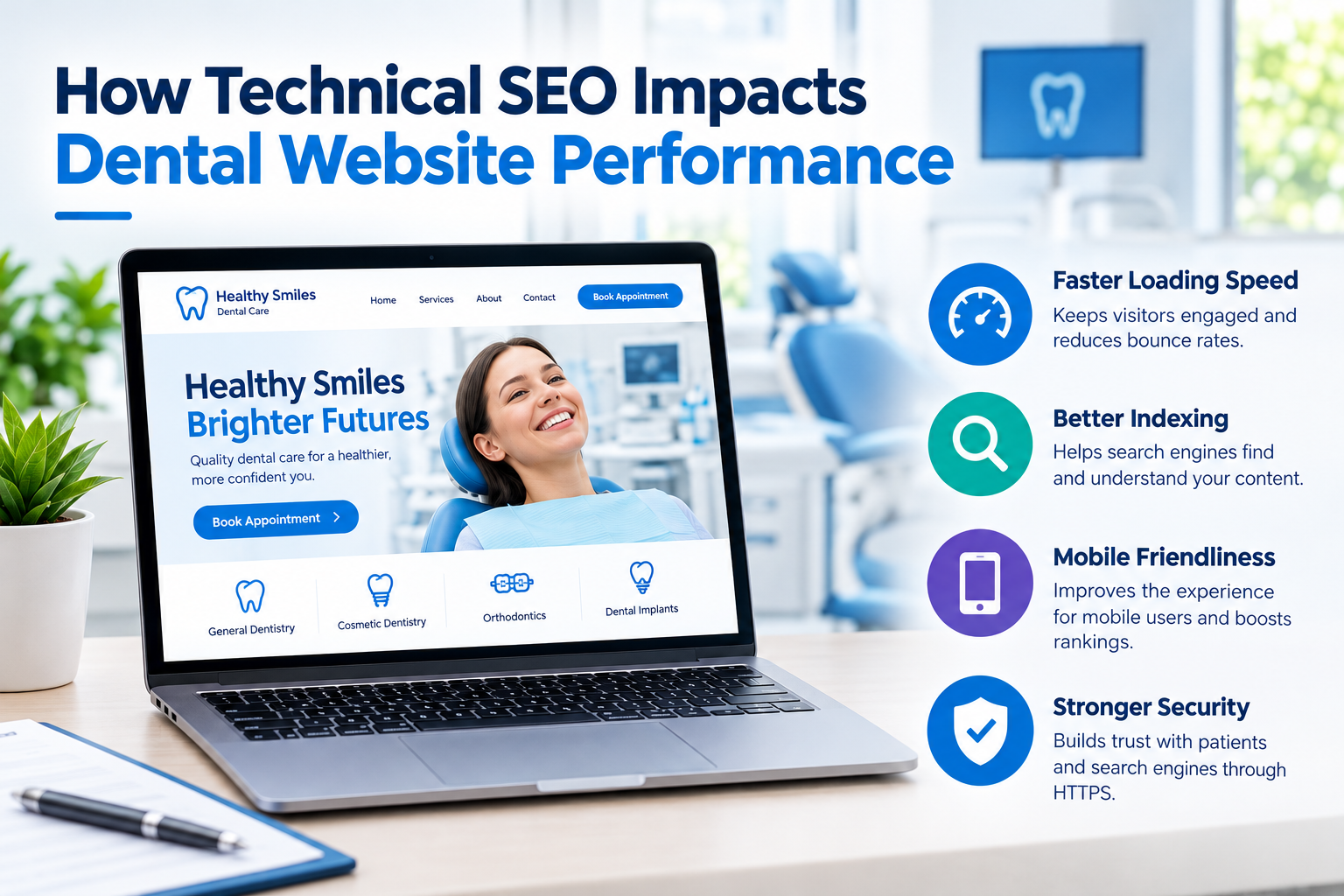
A dental website plays an important role in attracting new patients and building trust online. However, having an attractive design and helpful content is not enough to achieve strong search engine rankings. Your website must also load quickly, work smoothly on mobile devices, and allow search engines to understand its pages. This is where technical SEO becomes essential.
Technical SEO focuses on improving the behind-the-scenes elements of a website to make it easier for search engines to crawl, index, and rank its content. For dental practices, these improvements can increase online visibility, improve user experience, and help potential patients find the services they need.
Technical SEO involves optimizing a website’s structure, speed, security, mobile usability, and other technical elements. It ensures that search engines can access important pages and understand how they relate to one another.
For example, when someone searches for a dentist offering teeth whitening or dental implants, a technically optimized website has a better foundation for appearing in relevant search results.
Effective Dental SEO Services often include technical audits, website speed optimization, mobile performance improvements, XML sitemap management, and resolving indexing issues. These efforts help dental practices build a reliable website that supports long-term search engine optimization.
Website loading speed is an important factor in user experience. Patients searching for dental care may leave a website if its pages take too long to load, especially when they need information quickly.
A slow website can make it difficult for visitors to explore treatment options, check clinic details, or schedule appointments.
To improve website speed, dental practices should consider the following steps:
Google’s Core Web Vitals can help evaluate loading performance, responsiveness, and visual stability. Improving these measurements can create a smoother browsing experience and support overall SEO performance.
Many people search for nearby dentists using smartphones. If a dental website is difficult to navigate on a small screen, potential patients may struggle to find essential information or contact the clinic.
A mobile-friendly website should have readable text, appropriately sized buttons, simple navigation, and easily accessible appointment forms.
Dental practices should also ensure that their mobile and desktop versions provide consistent, useful content. Important service descriptions, contact details, and relevant internal links should remain accessible on mobile devices.
Mobile optimization helps create a convenient experience for patients and supports Google’s mobile-first indexing approach.
A well-organized website helps visitors find information without unnecessary effort. It also allows search engines to understand the relationship between different pages.
For example, a dental practice might organize its website into clear categories such as general dentistry, cosmetic dentistry, orthodontics, and restorative treatments. Each category can contain dedicated service pages with relevant information.
Descriptive URLs, logical navigation menus, and useful internal links strengthen this structure.
A clear website hierarchy also helps distribute internal link equity across important pages. When implemented correctly, this approach makes treatment information easier to discover and supports a more effective SEO strategy.
Search engines must discover and index website pages before they can appear in organic search results. Technical problems can prevent valuable dental service pages from being indexed correctly.
Common issues include broken links, incorrect robots.txt directives, accidental noindex tags, and missing XML sitemaps.
Dental practices should regularly review their websites using Google Search Console to identify indexing problems and inspect important URLs.
An XML sitemap can help search engines discover relevant pages, while an appropriately configured robots.txt file helps manage crawler access. However, these tools do not guarantee indexing.
Resolving technical errors ensures that search engines have a better opportunity to discover the pages that matter most to prospective patients.
Patients expect a dental website to provide a secure browsing experience, particularly when submitting appointment requests or personal information.
HTTPS encrypts information exchanged between a visitor’s browser and the website. It also serves as a lightweight Google ranking signal.
Dental practices should install a valid SSL/TLS certificate, redirect HTTP pages to their HTTPS equivalents, and eliminate mixed-content issues.
Security improvements do not replace strong content or a good user experience, but they contribute to a trustworthy website environment.
Structured data is a standardized format that helps search engines interpret information about a website.
Dental practices may use appropriate LocalBusiness or more specific supported business schema to describe details such as the practice name, address, telephone number, and website.
Accurate structured data can improve search engines’ understanding of a dental business and may make eligible pages suitable for certain search enhancements. However, adding schema does not guarantee rich results or higher rankings.
Practices should ensure that structured data matches the information visible on their websites and follows Google’s guidelines.
Technical SEO works best when it is part of a broader optimization strategy. A website may load quickly and have a clean structure, but it still needs relevant content, useful service pages, and accurate local business information.
Professional Dental SEO Services can help practices identify technical weaknesses, prioritize fixes, monitor performance, and maintain a search-friendly website as it grows.
A comprehensive strategy may include regular technical audits, broken-link monitoring, Core Web Vitals assessments, structured data validation, and ongoing Search Console reviews.
These activities help dental practices maintain a strong technical foundation while supporting their broader patient acquisition goals.
For dental clinics looking to strengthen their online presence, professional Dental SEO marketing solutions can complement technical improvements with a more comprehensive optimization approach.
Technical SEO is not a one-time task. Website updates, new plugins, redesigns, and changes to hosting can introduce problems over time.
Dental practices should regularly monitor important performance indicators, including:
Core Web Vitals: Assess loading speed, responsiveness, and visual stability.
Indexing status: Check whether important service pages are indexed.
Crawl errors: Identify broken URLs and accessibility issues.
Mobile usability: Test navigation and forms on different screen sizes.
Organic traffic: Review changes in search impressions, clicks, and relevant landing-page visits.
Tracking these indicators helps identify problems early and supports informed decisions about future improvements.
Technical SEO is a fundamental part of building a successful dental website. Faster loading times, mobile-friendly layouts, secure connections, clear site architecture, and proper indexing help search engines access website content while making it easier for patients to navigate.
Although technical improvements cannot guarantee top rankings or a specific number of new patients, they create a stronger foundation for long-term organic visibility.
Combining technical optimization with valuable content, local SEO, and ongoing performance monitoring helps dental practices compete more effectively online. If you want to improve your website’s technical health and search performance, contact us to discuss your dental website optimization needs.
Why is technical SEO important for dental websites?
Technical SEO helps search engines crawl and index important pages while improving website speed, security, mobile usability, and navigation. These improvements create a stronger foundation for organic search visibility.
Does website speed affect dental SEO rankings?
Yes. Page experience and Core Web Vitals can contribute to Google’s ranking systems, although they are not the only factors. Relevant content, search intent, competition, and other signals also influence rankings.
How often should a dental website undergo a technical SEO audit?
A dental website should generally receive a comprehensive technical audit every few months, with additional checks after redesigns, major updates, or hosting changes. High-traffic websites may benefit from more frequent monitoring.
Can technical SEO help a dental practice attract more patients?
Technical SEO can help make a website more accessible, usable, and discoverable in search engines. When combined with relevant service content and local SEO, it may help attract more qualified visitors and encourage appointment inquiries.
What tools can dentists use to check technical SEO?
Google Search Console helps monitor indexing and search performance, while PageSpeed Insights evaluates page performance and Core Web Vitals. A technical SEO crawler can also help identify broken links, redirect issues, and other website problems.