

How Technical SEO Impacts Dental Website Performance
Oct 16, 2026


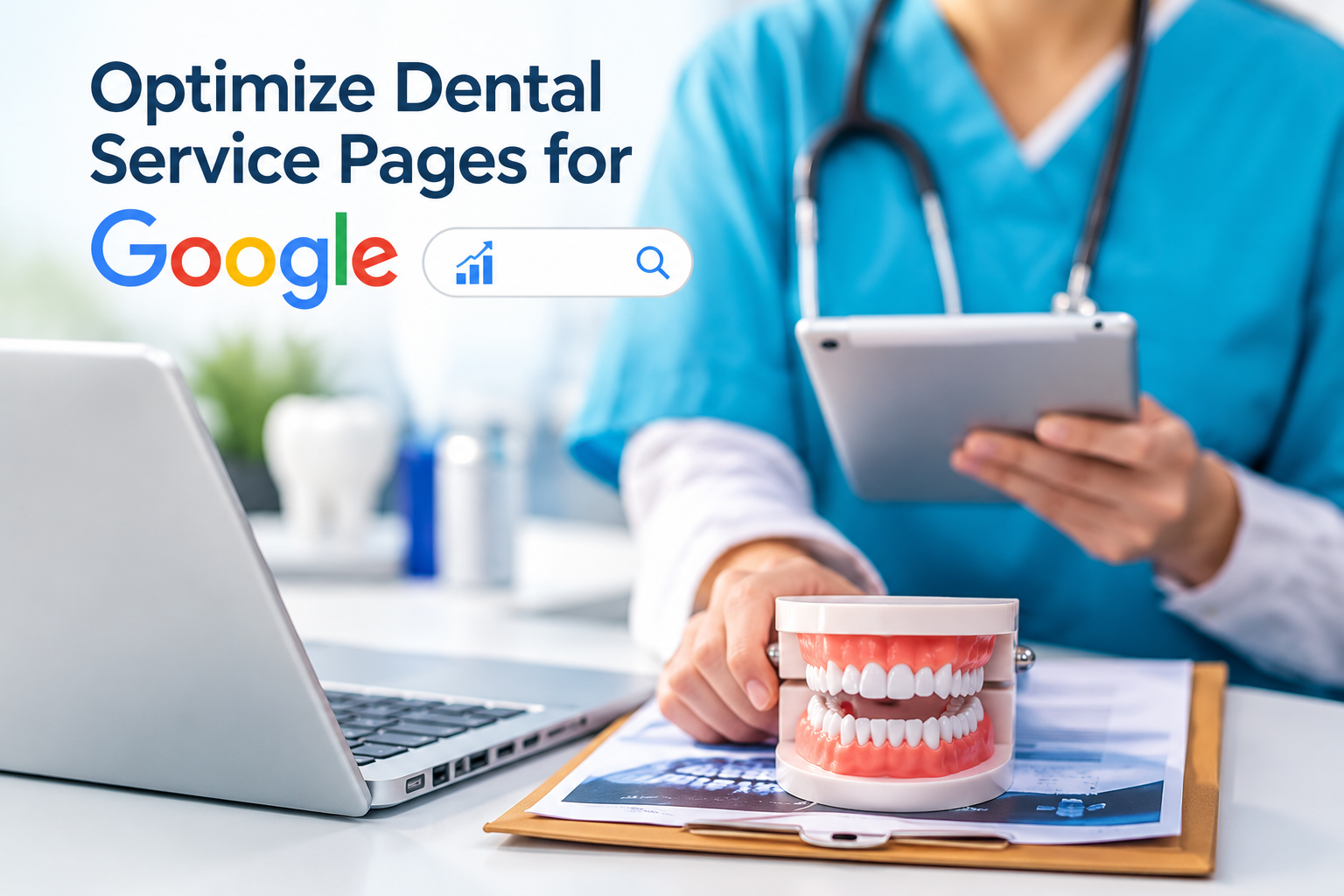
Optimizing dental service pages for Google is essential for attracting potential patients and improving your dental practice’s online visibility. When people search for treatments such as teeth whitening, dental implants, root canals, or braces, they want reliable information and a nearby dentist they can trust. A well-optimized service page helps your website appear in relevant search results while providing visitors with the information they need to make informed decisions.
Keyword research is the foundation of effective dental service page optimization. Identify the search terms potential patients use when looking for specific dental treatments. For example, a dental implant page might target phrases such as “dental implants near me,” “dental implant treatment,” or “cost of dental implants.”
Use your primary keyword naturally in the page title, main heading, introduction, subheadings, and meta description. Include relevant variations throughout the content without keyword stuffing. Professional Dental SEO Services can help identify valuable keywords that match patient search intent and support a more focused optimization strategy.
Every dental service page should explain the treatment clearly and address common patient concerns. Describe how the procedure works, its benefits, who may need it, and what patients can expect during recovery. Include information about treatment options, preparation, and aftercare when relevant.
Avoid publishing generic content that could apply to every dental practice. Instead, provide accurate, original information that reflects your services and expertise. Clear explanations help patients understand their options and build confidence in your practice.
Page titles and meta descriptions help search engines understand your content and encourage users to visit your website.
Write a unique title for every service page that includes the treatment and, where appropriate, your service area. For example, “Professional Teeth Whitening in Delhi | Dental Clinic” is more descriptive than a generic title such as “Our Services.”
Create a concise meta description that summarizes the page’s value and encourages potential patients to learn more. Although meta descriptions are not a direct Google ranking factor, they can influence how users engage with search results.
Internal links connect related pages on your dental website and help visitors discover relevant information. For example, a dental implant page could link to your consultation page, dental crown services, or a blog explaining implant aftercare.
Use descriptive anchor text that tells readers what they can expect from the linked page. Avoid adding too many unnecessary links, and ensure important service pages are accessible from your main navigation or relevant service categories.
A strategic approach to Dental SEO Services can help strengthen your website structure and improve the discoverability of essential treatment pages.
Many patients search for dentists using smartphones. If your website loads slowly, displays poorly on smaller screens, or has difficult navigation, visitors may leave before contacting your practice.
Use a responsive design that adapts to different screen sizes. Make phone numbers clickable, keep appointment forms simple, and ensure important information is easy to find. Optimize image sizes and reduce unnecessary scripts to improve loading speed.
Google also evaluates page experience signals, including Core Web Vitals, which measure loading performance, responsiveness, and visual stability. Regular technical checks can help identify issues affecting usability.
Dental practices typically serve patients within specific geographic areas, making local optimization particularly important. Include your city or neighborhood naturally in relevant page content when appropriate.
Display your practice name, address, phone number, opening hours, and service area accurately. Maintain an updated Google Business Profile and ensure your business information remains consistent across relevant directories.
You can also explain how your practice serves local patients, including available treatments and convenient appointment options. Avoid creating multiple nearly identical location pages with only the city name changed, as these pages may provide little additional value.
High-quality images can make dental service pages more informative and engaging. Use relevant photographs of your clinic, equipment, or treatment process where appropriate. Add descriptive alt text to meaningful images to improve accessibility and help search engines understand their context.
Consider implementing appropriate structured data, such as LocalBusiness or Dentist markup, when it accurately represents your practice. Structured data can help search engines interpret your business information, although it does not guarantee enhanced search results.
Validate your markup and keep all information accurate and consistent with the visible page content.
Dental treatment decisions involve health, comfort, and cost, so credibility matters. Present your dentists’ qualifications, professional experience, treatment approach, and relevant patient reviews where appropriate. Ensure medical information is accurate and reviewed by qualified professionals.
Track each service page’s performance through Google Search Console and website analytics. Monitor impressions, clicks, search queries, organic traffic, and appointment inquiries. Use these insights to identify pages that need better content, improved calls to action, or technical corrections.
Consistent optimization through professional Dental SEO Services can help your website adapt to changing search behavior and provide a better experience for potential patients.
How do I optimize a dental service page for Google?
Research relevant keywords, publish helpful content, optimize titles and headings, improve mobile usability, add internal links, and maintain accurate local business information.
How long should a dental service page be?
There is no fixed word count that guarantees better rankings. Focus on covering the treatment thoroughly, answering patient questions, and avoiding unnecessary repetition.
Are keywords important for dental service pages?
Yes. Relevant keywords help search engines understand the page’s subject and connect it with appropriate searches. Use them naturally rather than repeating them excessively.
How often should dental service pages be updated?
Review pages regularly and update them whenever treatment information, pricing, technology, or practice details change. Use performance data to identify opportunities for improvement.
Can SEO help dental practices attract more patients?
Effective SEO can improve visibility for relevant searches and bring more qualified visitors to your website. Actual patient inquiries depend on factors such as competition, location, reputation, website usability, and the quality of your services.
Optimizing dental service pages for Google requires a combination of useful content, relevant keywords, technical performance, local SEO, and patient-focused design. By making each page informative, accessible, and trustworthy, your dental practice can improve its online presence and help potential patients find the treatments they need.
If you want to strengthen your website’s search performance, contact us to discuss an optimization strategy tailored to your dental practice.