

How to Optimize Dental Service Pages for Google
Oct 22, 2026


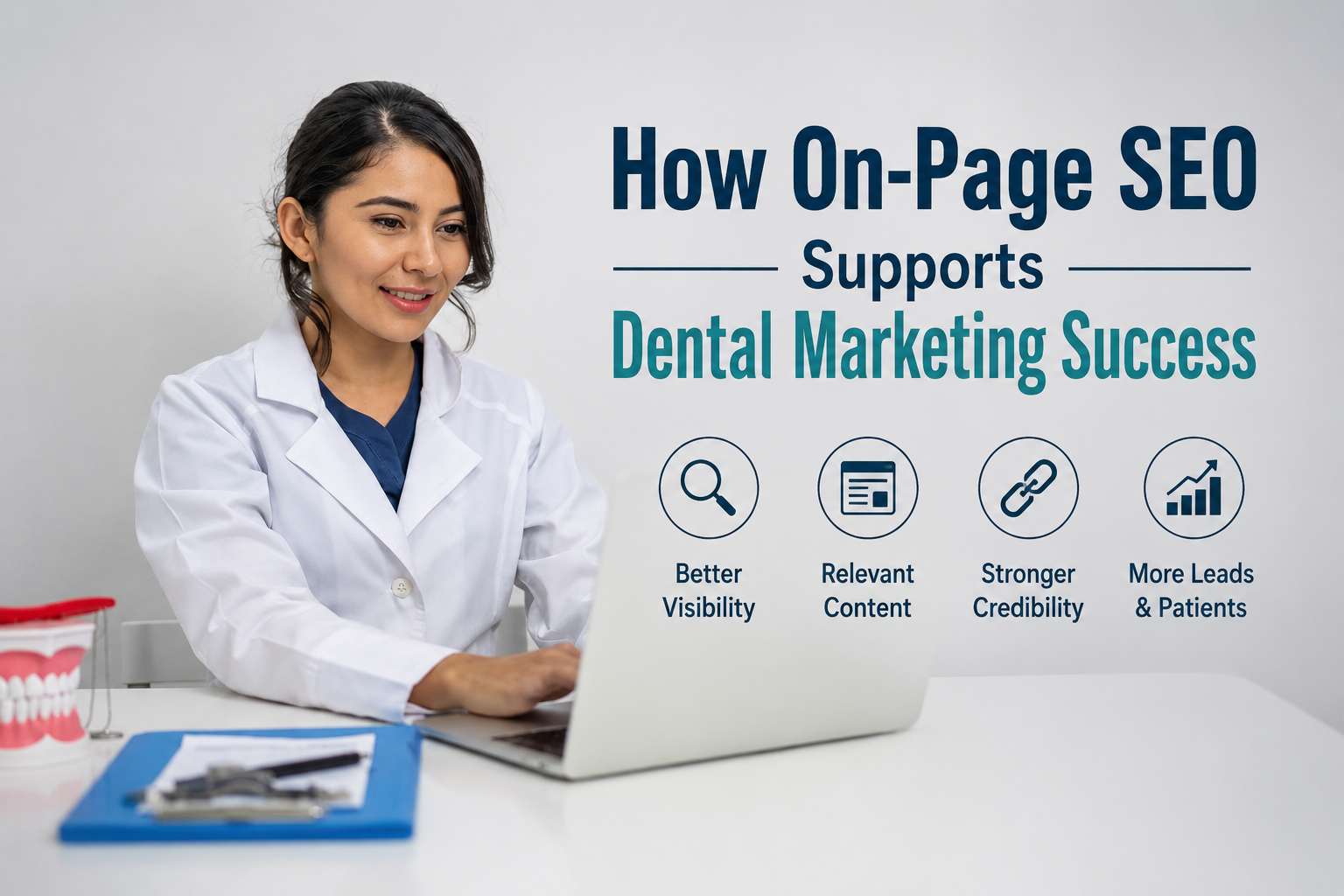
For dental practices, having a professional website is only the beginning of building a strong online presence. Patients increasingly use search engines to find dentists, compare treatments, read reviews, and decide where to schedule an appointment. If a dental website does not clearly communicate its services or provide a useful experience, it may struggle to attract the right audience.
This is where on-page SEO becomes an important part of a successful dental marketing strategy. On-page SEO focuses on the elements of a website that can be improved directly, including page content, headings, keywords, title tags, internal links, images, URLs, and overall user experience. When these elements work together, they help search engines understand a website while making its content easier for potential patients to navigate.
On-page SEO refers to the practice of improving individual web pages so that they are more relevant to search queries and useful to visitors. For a dental practice, this can involve creating dedicated pages for treatments such as dental implants, teeth whitening, root canals, orthodontics, or emergency dentistry.
It also involves making sure each page has a clear purpose. A service page should explain the treatment, its benefits, who may need it, what patients can expect, and how they can take the next step.
Rather than filling pages with keywords, effective SEO focuses on relevance, clarity, and genuine value. Search engines have become better at understanding context and user intent, so dental websites should be written primarily for people while following sound SEO practices.
Keyword selection plays an important role in attracting relevant visitors. Patients may search for broad terms such as “dentist near me” or more specific phrases such as “dental implants in [city]” or “emergency dentist near me.”
A well-planned Dental SEO Marketing strategy uses relevant keywords naturally throughout important website elements. These may include:
The goal is not to repeat the same phrase excessively. Instead, content should address the topics and questions that potential patients are actually searching for.
Many dental practices offer numerous treatments, but placing all of them on a single page can make it difficult for both visitors and search engines to understand what the practice specializes in.
Creating individual service pages provides an opportunity to give each treatment the attention it deserves. For example, a dental implant page can explain the procedure, candidacy, advantages, recovery expectations, and common patient questions.
Each page can also target a specific search intent. Someone searching for “dental implants cost” has a different concern from someone searching for “what are dental implants?” Addressing both informational and commercial questions can help a website serve patients at different stages of the decision-making process.
Useful content gives dental websites more opportunities to appear for relevant searches. A practice can publish educational articles covering common patient concerns, treatment comparisons, oral hygiene advice, and questions about procedures.
For example, a dental blog might cover topics such as:
This type of content can introduce a practice to people who are researching their options before they are ready to book an appointment.
Consistent, well-structured content also supports Dental SEO Marketing by giving search engines more context about the practice’s expertise and areas of service.
Dental services are highly location-dependent. Most patients prefer a convenient practice within their city or surrounding area. As a result, local relevance is an important part of dental website optimization.
On-page elements can reinforce local relevance by naturally mentioning the communities and areas served by the practice. Location-specific service pages can also help when they provide genuinely useful information rather than simply repeating city names.
A dental website should clearly display essential business information, including its practice name, address, phone number, operating hours, and service areas. This information should remain consistent with the practice’s other online profiles.
SEO is not only about search rankings. A website must also provide a smooth experience after visitors arrive.
Clear navigation helps potential patients quickly find what they need. Important pages such as services, about the dentist, contact information, insurance details, and appointment options should be easy to access.
Internal linking can further improve navigation. For example, a blog article about tooth loss could naturally link to a dental implant service page. This helps visitors explore related information while giving search engines additional context about the site’s structure.
A well-organized website can support both usability and Dental SEO Marketing goals.
Page titles and meta descriptions help communicate what a webpage is about. A strong title should be specific, readable, and relevant to the page’s primary topic.
For example, instead of using a generic title such as “Our Services,” a dental practice could use a more descriptive title such as “Dental Implants in [City] | [Practice Name].”
Meta descriptions should briefly explain what users can expect from the page. Although they are not simply a place to insert keywords, a clear and compelling description can encourage searchers to choose the page when it appears in search results.
A significant number of prospective patients browse websites from smartphones. If a dental website is difficult to read or navigate on a smaller screen, visitors may leave before contacting the practice.
On-page SEO should therefore work alongside mobile-friendly design. Text should be easy to read, buttons should be simple to use, and important information should not be buried beneath unnecessary content.
The appointment process should also be straightforward. A visitor who decides to schedule should be able to find the appropriate contact or booking option without unnecessary steps.
Dental care can involve anxiety, uncertainty, and significant financial decisions. Patients often want answers before committing to treatment.
Well-written website content can address those concerns directly. Explaining procedures in simple language, answering common questions, discussing preparation and aftercare, and presenting accurate information can make a website more useful and trustworthy.
Content should also accurately represent the qualifications, services, and experience of the dental practice. Avoiding exaggerated claims is important because credibility matters to both patients and search engines.
Ranking well is valuable, but visibility alone does not guarantee new appointments. A dental website needs to guide visitors toward meaningful actions.
Clear calls to action can encourage users to:
Calls to action should be relevant to the page. A patient reading an emergency dentistry page, for example, may need immediate contact information, while someone reading an educational article may first want to learn more about a treatment.
When content, SEO, and conversion elements work together, Dental SEO Marketing can contribute to a more effective patient acquisition strategy.
On-page SEO is not a one-time task. Search behavior, patient expectations, website technology, and search engine systems continue to evolve. Dental practices should periodically review their website to identify outdated information, weak pages, broken internal links, missing content opportunities, and changes in search intent.
Performance data can help determine which pages attract visitors and which pages need additional attention. Updating existing content can also keep information accurate and useful.
The most effective approach is continuous improvement rather than trying to manipulate search results through excessive keyword usage or low-quality content.
Several mistakes can limit the effectiveness of a dental website. Common examples include:
Avoiding these problems can create a stronger foundation for sustainable online visibility.
A practical on-page SEO process starts with reviewing the current website. Identify the services that generate the most value for the practice and make sure each has a dedicated, informative page.
Next, review the keywords and search intent associated with those services. Improve page titles, headings, content structure, internal links, images, and calls to action. Then assess whether the website provides clear answers to the questions patients commonly ask.
It is also useful to monitor performance over time. Search visibility, organic traffic, engagement, conversions, and appointment inquiries can provide valuable insights into what is working and where further improvements are needed.
If your practice needs professional assistance with its online strategy, you can contact us to discuss your dental marketing needs.
What is on-page SEO in dental marketing?
On-page SEO involves improving the content and technical elements of individual dental website pages so search engines can understand them and patients can find useful information more easily.
Why are service pages important for dental SEO?
Dedicated service pages allow a practice to provide detailed information about individual treatments while targeting relevant searches and addressing specific patient needs.
How often should dental website content be updated?
There is no universal schedule. Content should be reviewed whenever information becomes outdated, services change, search intent shifts, or performance data indicates that a page needs attention.
Does on-page SEO help local dental searches?
Yes. Well-structured, locally relevant content can help search engines understand where a dental practice operates and which services it provides. Local SEO should also include accurate business information and other off-page signals.
Can on-page SEO increase dental appointments?
On-page SEO can help attract relevant visitors, but rankings alone do not guarantee appointments. Strong content, clear calls to action, a trustworthy website, convenient contact options, and an effective overall marketing strategy are also important.
Is keyword stuffing necessary for dental SEO?
No. Excessive keyword repetition can make content difficult to read and may create a poor user experience. Keywords should be incorporated naturally while focusing on the questions and needs of prospective patients.
On-page SEO provides the foundation for a dental website that is both search-friendly and patient-focused. From creating useful service pages and targeting relevant keywords to improving navigation, local relevance, mobile usability, and conversion opportunities, every element can contribute to a stronger online presence.
For dental practices competing for attention in local search results, a thoughtful Dental SEO Marketing approach can help connect valuable website content with people actively looking for dental care. The key is to focus on relevance and usefulness rather than shortcuts.
When on-page SEO becomes part of an ongoing marketing strategy, a dental website can do more than attract search traffic. It can educate prospective patients, establish credibility, answer important questions, and make it easier for visitors to take the next step toward scheduling care.