Author: admin

  • How Can Dentists Optimize Google Business Profile for SEO?

    How Can Dentists Optimize Google Business Profile for SEO?

    In today’s digital-first world, patients rely heavily on online search to find local dental services. Whether they need a routine cleaning, cosmetic dentistry, or emergency care, their journey often begins with a quick Google search. This is where your Google Business Profile (GBP) becomes a powerful tool. For dental practices, optimizing this profile is not just an option—it’s essential for visibility, credibility, and growth. With the right approach to Dental SEO Marketing, dentists can significantly improve their local search rankings and attract more patients.

    Why Google Business Profile Matters for Dentists

    Google Business Profile is often the first impression potential patients have of your practice. When someone searches for “dentist near me,” Google displays a local pack featuring top listings with maps, reviews, and key information. If your profile is optimized, your chances of appearing in this coveted space increase dramatically.

    An effective GBP acts as a mini-website, providing essential details such as your address, hours, services, and patient reviews. It also supports engagement through features like messaging, Q&A, and posts. Integrating this into your broader Dental SEO Marketing strategy ensures your practice stands out in a competitive local market.

    Step 1: Claim and Verify Your Listing

    The first step is simple but crucial—claim and verify your Google Business Profile. Without verification, you won’t have control over your listing, which can lead to outdated or incorrect information. Once verified, ensure that all details are accurate and consistent with your website and other online directories.

    Consistency in your Name, Address, and Phone Number (NAP) is a foundational element of Dental SEO Marketing. Even small discrepancies can confuse search engines and negatively impact your rankings.

    Step 2: Optimize Your Business Information

    Fill out every section of your profile completely. This includes:

    • Business name (avoid keyword stuffing)
    • Address and service areas
    • Phone number
    • Website link
    • Operating hours

    Choose the most relevant primary category, such as “Dentist,” and add secondary categories like “Cosmetic Dentist” or “Pediatric Dentist” if applicable. These categories help Google understand your services and match your profile with relevant searches.

    Step 3: Write a Compelling Business Description

    Your business description is an opportunity to tell potential patients who you are and what sets you apart. Keep it clear, informative, and patient-focused. Naturally incorporate keywords like Dental SEO Marketing, but avoid overstuffing.

    For example, mention your specialties, years of experience, advanced technology, or patient-centered approach. A well-written description improves both user engagement and search relevance.

    Step 4: Add High-Quality Photos and Videos

    Visual content plays a significant role in attracting patients. Profiles with photos receive more clicks and engagement than those without. Upload high-quality images of:

    • Your clinic exterior and interior
    • Dental equipment
    • Staff and team members
    • Before-and-after treatment results (with consent)

    Videos, such as virtual tours or patient testimonials, can further enhance your profile. Regularly updating visuals signals activity to Google, which can positively influence rankings as part of your Dental SEO Marketing efforts.

    Step 5: Encourage and Manage Patient Reviews

    Reviews are one of the most influential factors in local SEO and patient decision-making. Encourage satisfied patients to leave reviews by:

    • Asking in person after appointments
    • Sending follow-up emails or SMS with review links
    • Displaying reminders in your clinic

    Respond to all reviews—both positive and negative—professionally and promptly. Thank patients for positive feedback and address concerns in negative reviews with empathy and solutions. Active review management demonstrates credibility and trustworthiness, strengthening your Dental SEO Marketing strategy.

    Step 6: Utilize Google Posts Regularly

    Google Posts allow you to share updates directly on your profile. These can include:

    • Promotions and special offers
    • New services or technologies
    • Oral health tips
    • Announcements and events

    Posting regularly keeps your profile fresh and engaging. It also signals to Google that your business is active, which can improve visibility. Think of posts as micro-content pieces that support your overall Dental SEO Marketing approach.

    Step 7: Optimize for Keywords and Services

    Include relevant keywords in your services section and throughout your profile. List all services you offer, such as teeth whitening, root canals, implants, and orthodontics. Each service can have a brief description that includes targeted keywords.

    However, maintain a natural tone. Overusing keywords can harm readability and may be flagged by Google. A balanced approach ensures your Dental SEO Marketing efforts remain effective and compliant.

    Step 8: Enable Messaging and Q&A

    Google Business Profile offers features that enhance communication with potential patients. Enable messaging so users can contact you directly from your profile. Respond quickly to inquiries to improve engagement and trust.

    The Q&A section is another valuable feature. You can pre-populate common questions and answers, such as:

    • “Do you accept walk-ins?”
    • “What insurance plans do you accept?”
    • “Do you offer emergency dental services?”

    This proactive approach improves user experience and supports your Dental SEO Marketing goals by providing relevant information upfront.

    Step 9: Monitor Insights and Performance

    Google provides insights into how users interact with your profile. You can track:

    • How people find your listing
    • Search queries used
    • Actions taken (calls, website visits, directions)

    Analyzing this data helps you understand what’s working and where improvements are needed. For example, if most users find you through “teeth whitening near me,” you can further optimize content around that service.

    Data-driven decisions are key to refining your Dental SEO Marketing strategy and staying ahead of competitors.

    Step 10: Maintain Consistency Across the Web

    Your Google Business Profile should align with your website and other online listings. Ensure that your NAP details, services, and branding are consistent across platforms like directories and social media.

    Inconsistencies can confuse search engines and reduce your credibility. A unified online presence strengthens your authority and boosts your Dental SEO Marketing performance.

    Final Thoughts

    Optimizing your Google Business Profile is one of the most effective ways to enhance your local SEO and attract new patients. It’s not just about filling out information—it’s about creating a dynamic, engaging, and trustworthy online presence.

    From accurate business details and compelling descriptions to reviews, photos, and regular updates, every element plays a role in your success. When integrated into a comprehensive Dental SEO Marketing strategy, your GBP becomes a powerful tool for growth.

    Dentists who invest time and effort into optimizing their profiles will not only improve their search rankings but also build stronger connections with their community. In a competitive landscape, that connection can make all the difference.
  • How Can Dentists Turn SEO Traffic into Patients?

    How Can Dentists Turn SEO Traffic into Patients?

    In today’s digital-first world, simply having a dental website is not enough. Many dental practices invest time and money into improving their search engine rankings, but a common challenge remains: how to turn that increased traffic into actual patients. Attracting visitors through search engines is only the first step—the real goal is converting those visitors into appointments and long-term clients.

    This is where a well-planned Dental SEO Marketing strategy becomes essential. By focusing not only on visibility but also on user experience, trust-building, and clear conversion paths, dentists can transform website traffic into a steady stream of new patients.

    Understanding the Intent Behind Traffic

    Not all website visitors are equal. Some users are casually browsing, while others are actively searching for a dentist near them. To convert traffic effectively, dentists must understand search intent.

    For example, someone searching for “best dentist near me” or “emergency tooth extraction” is likely ready to book an appointment. On the other hand, a user searching for “how to whiten teeth naturally” may still be in the research phase.

    A strong Dental SEO Marketing approach targets both types of users—providing informative content for early-stage visitors while guiding high-intent users toward booking an appointment.

    Optimize Your Website for Conversions

    Driving traffic is pointless if your website doesn’t encourage visitors to take action. Your website should be designed with conversion in mind.

    Start with clear and visible calls-to-action (CTAs). Buttons like “Book an Appointment,” “Call Now,” or “Schedule a Consultation” should be prominently displayed on every page. Make sure your contact information is easy to find, especially on mobile devices.

    Additionally, your website should load quickly, be mobile-friendly, and provide a seamless user experience. A slow or confusing website can cause potential patients to leave before taking any action.

    Build Trust Through Content

    Patients don’t choose a dentist lightly—they want someone they can trust. High-quality, informative content plays a key role in building that trust.

    Create blog posts, FAQs, and service pages that answer common patient concerns. Explain procedures in simple terms, address fears, and highlight the benefits of treatments. Including before-and-after photos, patient testimonials, and case studies can also significantly improve credibility.

    When implemented correctly, Dental SEO Marketing not only drives traffic but also positions your practice as an authority in the field, making visitors more likely to convert.

    Leverage Local SEO

    For dental practices, local visibility is critical. Most patients prefer a dentist located near their home or workplace. Optimizing your online presence for local searches ensures that your practice appears when potential patients are looking nearby.

    Make sure your business profile is complete and accurate across all platforms. Include your address, phone number, working hours, and services. Encourage satisfied patients to leave positive reviews, as these can strongly influence decision-making.

    Local-focused Dental SEO Marketing ensures that your website attracts the right audience—people who are actually able to visit your clinic.

    Use Landing Pages for Specific Services

    Instead of having a single generic services page, create dedicated landing pages for each treatment you offer. For example, have separate pages for teeth whitening, dental implants, root canals, and orthodontics.

    Each page should be optimized for specific keywords and include detailed information about the procedure, benefits, pricing (if possible), and a clear call-to-action.

    This not only improves your SEO rankings but also increases conversion rates, as visitors land on pages that directly match their needs.

    Add Online Booking and Easy Contact Options

    Convenience plays a major role in conversion. If booking an appointment is complicated, users may leave and choose another dentist.

    Offer multiple ways for patients to contact you—online booking forms, click-to-call buttons, live chat, or even messaging options. The easier it is to reach you, the higher the chances of conversion.

    An effective Dental SEO Marketing strategy always considers the patient journey, ensuring there are no barriers between interest and action.

    Retarget Visitors Who Don’t Convert

    Not every visitor will book an appointment on their first visit. However, that doesn’t mean they’re lost forever.

    Retargeting strategies allow you to reconnect with these users through ads or email campaigns. For example, if someone visits your dental implants page but doesn’t book, you can show them targeted ads highlighting your expertise or offering a limited-time consultation.

    This keeps your practice top-of-mind and increases the likelihood of conversion over time.

    Showcase Reviews and Social Proof

    Online reviews are one of the most powerful tools for converting traffic into patients. Positive feedback from real patients builds trust and reassures potential clients.

    Display reviews prominently on your website and integrate ratings from platforms like Google. Video testimonials and patient stories can further strengthen your credibility.

    Incorporating social proof into your Dental SEO Marketing efforts ensures that visitors feel confident in choosing your practice.

    Track and Improve Performance

    Finally, it’s important to measure the effectiveness of your efforts. Use analytics tools to track metrics such as bounce rate, time on site, and conversion rate.

    Identify which pages perform well and which need improvement. A/B testing different CTAs, layouts, and content can help you refine your strategy over time.

    Continuous optimization is key—what works today may not work tomorrow, so staying adaptable is crucial.

    Conclusion

    Attracting visitors through search engines is only half the battle. The real success lies in converting those visitors into loyal patients. By focusing on user experience, trust-building, and clear conversion strategies, dentists can maximize the value of their website traffic.

    A well-executed Dental SEO Marketing plan doesn’t just increase visibility—it creates meaningful patient relationships and drives long-term growth. By understanding patient intent, optimizing your website, and continuously improving your approach, you can turn your online presence into a powerful patient acquisition tool.

  • How Do You Optimize Dental Services Pages for SEO?

    How Do You Optimize Dental Services Pages for SEO?

    In today’s competitive digital landscape, having a well-designed dental website is no longer enough. If your potential patients can’t find your services online, you’re missing out on valuable opportunities to grow your practice. That’s where search engine optimization (SEO) comes in. Optimizing your dental service pages ensures that your practice appears in front of the right audience at the right time—when they are actively searching for dental care.

    This guide will walk you through practical, effective strategies to optimize your dental service pages for better visibility, higher rankings, and increased patient conversions.

    Start with Strategic Keyword Research

    Every successful SEO strategy begins with identifying the right keywords. Think about what your patients are searching for—terms like “teeth whitening,” “root canal treatment,” or “emergency dentist near me.”

    Focus on:

    • Primary keywords (e.g., dental implants, Invisalign)
    • Long-tail keywords (e.g., affordable dental implants in [city])
    • Local intent keywords (e.g., family dentist in [area])

    Incorporating relevant keywords naturally into your content is essential. Professional Dental SEO Services can help identify high-performing keywords tailored to your local market and competition.

    Create Dedicated Pages for Each Service

    One of the most common mistakes dental websites make is listing all services on a single page. Instead, create individual pages for each service you offer.

    For example:

    • Teeth Whitening
    • Dental Implants
    • Orthodontics
    • Pediatric Dentistry

    Each page should focus on one primary keyword and provide detailed, valuable information about that specific service. This improves your chances of ranking higher for targeted searches and enhances user experience.

    Optimize On-Page SEO Elements

    On-page SEO plays a critical role in helping search engines understand your content. Make sure each service page includes:

    Title Tags: Clear, keyword-rich titles (e.g., “Professional Teeth Whitening in [City]”)

    Meta Descriptions: Compelling summaries that encourage clicks

    Header Tags (H1, H2, H3): Structured headings that organize your content

    URL Structure: Clean and descriptive URLs (e.g., /dental-implants)

    Proper optimization ensures your pages are both search-engine-friendly and user-friendly. Many practices rely on Dental SEO Services to fine-tune these elements for maximum impact.

    Write High-Quality, Patient-Focused Content

    Content is the backbone of your SEO strategy. Your service pages should not only inform but also build trust and answer patient concerns.

    Include:

    • Clear explanations of procedures
    • Benefits and outcomes
    • FAQs addressing common patient questions
    • Pre- and post-treatment expectations

    Avoid overly technical language. Instead, write in a conversational tone that patients can easily understand. The goal is to educate and reassure potential patients, guiding them toward booking an appointment.

    Leverage Local SEO Optimization

    Dental practices rely heavily on local patients, so local SEO is essential. Optimize your service pages with location-specific information, such as:

    • City and neighborhood names
    • “Near me” phrases
    • Local landmarks or references

    Also, ensure your Name, Address, and Phone Number (NAP) are consistent across your website and online listings. Embedding a Google Map and linking to your Google Business Profile can further boost local visibility.

    Partnering with experts in Dental SEO Services can help strengthen your local presence and ensure your practice appears in local search results and map listings.

    Use Internal Linking Strategically

    Internal linking helps search engines crawl your site and improves user navigation. Link your service pages to:

    • Related services
    • Blog posts
    • Contact or appointment pages

    For example, a page about dental implants could link to a blog on “How to Care for Dental Implants.” This keeps users engaged longer and distributes SEO value across your site.

    Optimize for Mobile and Page Speed

    A large percentage of users search for dental services on their smartphones. If your website isn’t mobile-friendly, you risk losing potential patients.

    Ensure:

    • Responsive design across all devices
    • Fast loading times
    • Easy navigation and clickable buttons

    Page speed is also a ranking factor. Compress images, minimize code, and use reliable hosting to ensure your pages load quickly.

    Add Visual and Multimedia Elements

    Images and videos enhance user engagement and make your service pages more appealing. Consider including:

    • Before-and-after photos
    • Procedure demonstration videos
    • Infographics explaining treatments

    Make sure to optimize images with descriptive file names and alt text that include relevant keywords. This not only improves accessibility but also boosts SEO performance.

    Build Trust with Reviews and Testimonials

    Patient trust is crucial in healthcare decisions. Adding testimonials and reviews to your service pages can significantly influence potential patients.

    Include:

    • Real patient experiences
    • Star ratings
    • Case studies (if possible)

    Positive reviews also contribute to better local rankings. Many providers of Dental SEO Services emphasize reputation management as part of a comprehensive SEO strategy.

    Include Strong Calls-to-Action (CTAs)

    Your service pages should guide visitors toward taking action. Use clear and compelling CTAs such as:

    • “Book Your Appointment Today”
    • “Call Now for a Free Consultation”
    • “Schedule Your Visit Online”

    Make CTAs visible and easy to access, especially on mobile devices. The ultimate goal of SEO is not just traffic—but conversions.

    Keep Content Updated and Relevant

    SEO is not a one-time effort. Regularly updating your service pages ensures they remain accurate and competitive.

    Update:

    • Treatment information
    • Pricing (if listed)
    • Technology or techniques used
    • FAQs based on patient inquiries

    Fresh content signals to search engines that your website is active and relevant.

    Monitor Performance and Adjust Strategy

    Finally, track your SEO performance using tools like Google Analytics and Search Console. Monitor metrics such as:

    • Organic traffic
    • Keyword rankings
    • Bounce rate
    • Conversion rate

    Analyzing this data helps you understand what’s working and what needs improvement. Ongoing optimization is key to staying ahead of competitors.

    Working with experienced Dental SEO Services providers can simplify this process by offering insights, reports, and continuous improvements.

    Final Thoughts

    Optimizing dental service pages for SEO is a powerful way to attract more patients and grow your practice. By focusing on keyword strategy, high-quality content, local optimization, and user experience, you can significantly improve your online visibility.

    Remember, SEO is a long-term investment. Consistency, quality, and adaptability are essential for sustained success. Whether you handle it in-house or partner with professionals, implementing these strategies will position your dental practice for long-term growth in an increasingly digital world.

  • What Keywords Should Dentists Target for SEO?

    What Keywords Should Dentists Target for SEO?

    In today’s digital-first world, patients are no longer flipping through phone books to find a dentist. Instead, they turn to search engines to look for nearby clinics, read reviews, and compare services. This shift makes search engine optimization (SEO) essential for dental practices that want to grow their online presence. At the heart of any successful SEO strategy lies one critical element: choosing the right keywords.

    But what keywords should dentists actually target for SEO? The answer goes beyond simply picking popular terms—it requires a thoughtful approach that aligns with patient intent, local visibility, and long-term growth. Let’s explore how dentists can identify and use the most effective keywords to attract more patients.

    Understanding the Importance of Keywords in Dental SEO

    Keywords are the phrases people type into search engines when looking for dental services. These can range from broad terms like “dentist near me” to more specific searches like “emergency root canal treatment in [city].” When your website is optimized with the right keywords, it becomes easier for potential patients to find your services online.

    For dental practices, keywords are not just about traffic—they’re about attracting the right kind of traffic. This is where strategic planning and professional Dental SEO Services can make a significant difference, helping you identify high-intent keywords that convert visitors into appointments.

    Types of Keywords Dentists Should Target

    Local Keywords

    Local SEO is crucial for dentists because most patients search for services within their area. Keywords that include geographic locations help your practice appear in local search results.

    These keywords ensure that your website reaches people who are actively looking for dental care nearby. Incorporating local terms is a core part of effective Dental SEO Services, as it directly impacts your visibility in Google’s local listings.

    Service-Based Keywords

    Patients often search for specific treatments rather than general dental services. Targeting service-based keywords helps you attract individuals who already know what they need.

    Examples include:

    • “Dental implants specialist”
    • “Teeth whitening services”
    • “Invisalign treatment cost”

    By creating dedicated pages for each service and optimizing them with relevant keywords, you improve your chances of ranking higher in search results. This approach is commonly used in professional Dental SEO Services to drive targeted traffic.

    Long-Tail Keywords

    Long-tail keywords are longer, more specific phrases that typically have lower competition but higher conversion rates. These keywords reflect detailed search intent and often indicate that the user is ready to take action.

    While they may not generate massive traffic individually, long-tail keywords collectively bring in highly qualified leads. Leveraging them effectively is a key strategy within advanced Dental SEO Services.

    Question-Based Keywords

    Many patients search in the form of questions, especially when researching symptoms or treatments. Targeting these keywords allows you to provide helpful content while building trust with potential patients.

    Examples include:

    • “What is the cost of dental implants?”
    • “How long does a root canal take?”
    • “Is teeth whitening safe?”

    By answering these questions through blog posts or FAQs, you position your practice as an authority in dental care. This content-driven approach is often emphasized in modern Dental SEO Services strategies.

    Branded and Competitor Keywords

    Branded keywords include your clinic’s name, while competitor keywords involve other dental practices in your area. While these may not always be the primary focus, they can still play a role in your SEO strategy.

    Examples include:

    • “ABC Dental Clinic reviews”
    • “Best dentist near XYZ clinic”

    Optimizing for branded keywords ensures that patients can easily find your practice when they search for it directly.

    How to Find the Right Keywords

    Identifying the best keywords requires a combination of research, analysis, and understanding patient behavior. Here are some practical steps:

    Use Keyword Research Tools

    Tools like Google Keyword Planner, SEMrush, or Ahrefs can help you discover relevant keywords, search volumes, and competition levels.

    Analyze Competitors

    Look at what keywords other successful dental clinics are targeting. This can give you insights into what works in your local market.

    Focus on Search Intent

    Not all keywords are equal. Some indicate informational intent (research), while others show transactional intent (booking a service). Prioritize keywords that align with your goals.

    Consider Voice Search

    With the rise of voice assistants, people are using more conversational queries. Keywords like “Where can I find a dentist open now?” are becoming increasingly common.

    Best Practices for Using Dental Keywords

    Once you’ve identified the right keywords, it’s important to use them effectively across your website:

    Page Titles and Meta Descriptions: Include primary keywords naturally.

    Headings and Subheadings: Structure your content with keyword-rich headings.

    Website Content: Write informative, engaging content that incorporates keywords without overstuffing.

    Image Alt Text: Use descriptive keywords for images.

    URLs: Keep them clean and keyword-focused.

    A well-optimized website not only ranks better but also provides a better user experience, which is a key factor in SEO success.

    The Role of Professional SEO Support

    SEO can be complex and time-consuming, especially for busy dental professionals. This is where expert Dental SEO Services come into play. By working with specialists, you can develop a customized keyword strategy, optimize your website, and track performance effectively.

    Professional services not only save time but also ensure that your SEO efforts are aligned with the latest trends and search engine algorithms.

    Conclusion

    Choosing the right keywords is the foundation of a successful dental SEO strategy. By targeting local, service-based, long-tail, and question-based keywords, dentists can attract the right audience and increase patient inquiries.

    Remember, SEO is not a one-time effort—it’s an ongoing process that requires continuous optimization and adaptation. Whether you manage it in-house or rely on expert Dental SEO Services, the key is to stay focused on providing value to your patients while making your practice easy to find online.

  • What SEO Strategies Work Best for Dentists?

    What SEO Strategies Work Best for Dentists?

    In today’s digital-first world, most patients begin their search for a dentist online. Whether they are looking for a routine check-up, cosmetic dentistry, or emergency care, search engines often determine which clinics get noticed and which are overlooked. For dental practices, having a strong online presence is no longer optional—it’s a necessity. This is where Dental SEO Marketing plays a vital role, helping dentists connect with the right patients at the right time.

    Search engine optimization for dentists is not about chasing trends or shortcuts. It’s about building a sustainable strategy that aligns with how patients search, what they need, and how search engines evaluate credibility. Below, we explore the most effective SEO strategies that genuinely work for dentists and contribute to long-term growth.

    Understanding Patient Search Intent

    One of the most effective SEO strategies for dentists starts with understanding patient intent. People searching for dental services usually fall into a few clear categories: informational, navigational, or transactional. Some want answers to dental concerns, others are looking for a specific clinic, and many are ready to book an appointment.

    Dentists who tailor their website content to match these intents tend to perform better in search results. Informational blogs can answer common questions, while service pages should focus on booking-related keywords. This approach ensures your site remains relevant and useful to both users and search engines.

    Focusing on Local SEO for Dental Practices

    Dentistry is inherently local. Patients rarely travel far for routine dental care, which makes local SEO one of the most powerful strategies available. Optimizing your Google Business Profile, ensuring consistent name-address-phone (NAP) details, and earning local citations all contribute to higher visibility in local search results.

    Encouraging patient reviews is another essential element. Positive, authentic reviews signal trust and relevance to search engines while also influencing patient decisions. When combined with accurate local listings, these steps strengthen your presence in map results and local searches.

    Creating High-Quality, Patient-Centered Content

    Content remains the backbone of effective SEO. For dentists, this means writing content that educates, reassures, and answers real patient questions. Blogs about oral health, preventive care, treatment options, and aftercare tips can attract visitors who are actively seeking information.

    Service pages should be detailed, clear, and focused on patient needs rather than technical jargon. When content is written with empathy and clarity, it keeps users engaged longer, which sends positive signals to search engines. A thoughtful content plan supports Dental SEO Marketing by establishing authority and relevance over time.

    Optimizing On-Page SEO Elements

    On-page SEO is where technical precision meets content quality. Title tags, meta descriptions, header structures, and internal linking all play a role in how search engines interpret your site. For dentists, each service page should target a specific keyword or phrase related to patient searches.

    Clear headings, well-structured paragraphs, and descriptive image alt text enhance both accessibility and SEO. Internal links between related pages help search engines understand your site structure while guiding users to relevant information.

    Building Trust with Technical SEO

    Technical SEO ensures that your website functions smoothly for both users and search engines. Page speed, mobile responsiveness, secure browsing (HTTPS), and clean site architecture all influence rankings. Since many patients search for dentists on their phones, mobile optimization is especially critical.

    A technically sound website reduces bounce rates and improves user experience. When visitors can easily navigate your site and find what they need, search engines are more likely to reward your pages with better visibility.

    Earning Quality Backlinks Naturally

    Backlinks remain one of the strongest ranking signals, but quality matters far more than quantity. For dentists, earning links from reputable healthcare directories, local business associations, or dental-related blogs can significantly strengthen authority.

    Guest blogging, community involvement, and partnerships with local organizations are effective ways to earn relevant backlinks. These links signal credibility and help search engines view your practice as a trusted resource within your region.

    Leveraging Structured Data and Rich Results

    Structured data helps search engines better understand your content. For dental websites, schema markup can highlight important details such as services, reviews, business hours, and location. This can lead to enhanced search listings that stand out visually.

    While structured data does not guarantee higher rankings, it improves how your practice appears in search results. Enhanced listings often result in higher click-through rates, supporting overall SEO performance.

    Tracking Performance and Refining Strategy

    SEO is not a one-time task; it’s an ongoing process. Dentists should regularly monitor website traffic, keyword rankings, and conversion rates. Analytics tools provide valuable insights into what’s working and where adjustments are needed.

    By analyzing user behavior and search trends, practices can refine their content, improve underperforming pages, and adapt to changes in search algorithms. Consistent evaluation ensures that Dental SEO Marketing efforts remain aligned with patient needs and business goals.

    Integrating SEO with Patient Experience

    SEO works best when it supports a positive patient journey. Clear calls to action, easy appointment booking, and informative content all contribute to better user experience. When patients find your website helpful and easy to use, they are more likely to engage, book appointments, and return in the future.

    Search engines increasingly prioritize user satisfaction, making experience-driven optimization a crucial part of SEO success. Dentists who focus on both visibility and usability gain a competitive edge.

    Staying Consistent for Long-Term Results

    Consistency is often overlooked but essential. Publishing content regularly, updating service pages, and maintaining accurate listings signal reliability to search engines. Short-term tactics may bring temporary gains, but sustainable results come from steady effort.

    A well-maintained website reflects professionalism and commitment, qualities that resonate with both patients and search engines. Over time, consistent practices strengthen authority and visibility.

    Conclusion

    The most effective SEO strategies for dentists are rooted in understanding patients, serving local communities, and maintaining technical excellence. From local optimization and quality content to backlinks and performance tracking, each element plays a specific role in building a strong online presence. When these strategies work together, Dental SEO Marketing becomes a powerful driver of patient growth rather than just a ranking tactic.

    By focusing on authenticity, relevance, and long-term value, dentists can create an SEO foundation that supports their practice for years to come. In an increasingly competitive digital landscape, those who invest thoughtfully in SEO are far more likely to be found, trusted, and chosen by patients.

  • Does Blogging Support Dental SEO Marketing?

    Does Blogging Support Dental SEO Marketing?

    In today’s digital-first world, patients rarely choose a dentist by flipping through directories or relying only on word-of-mouth. Instead, they turn to search engines to find answers to their dental concerns, compare clinics, and evaluate trust before booking an appointment. This shift has made online visibility essential for dental practices of all sizes. Among the many strategies available, blogging has emerged as a powerful and sustainable way to strengthen search presence and patient engagement. But the question remains: does blogging genuinely support Dental SEO Marketing in a measurable way?

    The short answer is yes—but the reasons go far beyond simply posting articles on a website. Blogging influences how search engines view your dental practice, how potential patients perceive your expertise, and how consistently your brand stays visible online. Let’s explore how and why blogging plays such a vital role in dental SEO success.

    Understanding the Role of Content in Dental SEO

    Search engines aim to deliver the most relevant, helpful, and trustworthy information to users. For dental practices, this means your website must clearly demonstrate expertise, authority, and relevance in oral healthcare topics. Blogging helps achieve this by continuously adding fresh, topic-focused content that aligns with what patients are actively searching for.

    Unlike static service pages, blog posts allow dentists to address specific questions such as causes of tooth sensitivity, benefits of regular cleanings, or what to expect during a root canal. Each post creates an opportunity to appear in search results for long-tail queries—those detailed searches that often indicate strong intent.

    This ongoing content creation sends positive signals to search engines, showing that your website is active, informative, and patient-focused. Over time, this consistency strengthens the overall foundation of Dental SEO Marketing.

    How Blogging Improves Search Visibility for Dental Practices

    One of the clearest benefits of blogging is its impact on search visibility. Every blog post acts as an additional indexed page, giving search engines more reasons to display your site in results. When written strategically, blogs can target a wide range of keywords related to dental services, procedures, and patient concerns.

    For example, a single blog can address preventive care, oral hygiene tips, and early signs of gum disease. These topics may not always fit naturally on a service page, but they are highly relevant to potential patients. By answering these questions, your practice becomes visible to users at various stages of their decision-making journey.

    Additionally, well-structured blogs encourage longer time-on-site, lower bounce rates, and more internal navigation—all of which indirectly support SEO performance. This cumulative effect plays a significant role in the long-term success of Dental SEO Marketing strategies.

    Blogging Builds Trust and Demonstrates Expertise

    SEO is not only about rankings; it’s also about credibility. Patients are more likely to choose a dentist who appears knowledgeable, transparent, and patient-focused. Blogging allows dental professionals to explain procedures, address common fears, and share preventative advice in a clear and approachable way.

    When readers find helpful answers on your website, they begin to associate your practice with reliability and expertise. This trust can influence online behavior, such as contacting your clinic, sharing your content, or returning to your site for future information. These engagement signals further reinforce your site’s authority in search engines.

    From an SEO perspective, authoritative content also attracts backlinks from other websites, such as health blogs or local resources. These inbound links are a strong ranking factor and significantly strengthen Dental SEO Marketing efforts without relying on paid promotions.

    Supporting Local SEO Through Targeted Blogging

    For dental clinics, local visibility is crucial. Most patients look for services near their home or workplace, often using location-based searches. Blogging can support local SEO by naturally incorporating geographic references, community topics, and region-specific dental concerns.

    For instance, posts discussing seasonal dental issues, local oral health awareness events, or tips tailored to the lifestyle of your area help search engines connect your practice to a specific location. This relevance increases your chances of appearing in local search results and map listings.

    Over time, this localized content strategy enhances your practice’s online footprint and complements other local SEO tactics such as directory listings and reviews. When aligned properly, blogging becomes a steady contributor to Dental SEO Marketing at the community level.

    Blogging Encourages Consistency Without Aggressive Sales

    Unlike advertisements, blogs do not push services directly. Instead, they educate and inform, allowing patients to make decisions at their own pace. This softer approach aligns well with the healthcare industry, where trust and clarity matter more than aggressive selling.

    Search engines favor websites that prioritize user value over promotional language. Blogs written with patient education in mind tend to perform better because they address real concerns without sounding sales-driven. This approach supports sustainable SEO growth and positions your practice as a helpful resource rather than just a service provider.

    Consistency is another key advantage. A regular blogging schedule signals reliability to both users and search engines. Over time, this consistency strengthens brand recognition and reinforces the effectiveness of Dental SEO Marketing without requiring constant technical adjustments.

    Measuring the Impact of Blogging on Dental SEO

    The benefits of blogging are not abstract; they can be measured. Metrics such as organic traffic growth, keyword rankings, time spent on pages, and appointment inquiries all provide insight into how blogging supports SEO goals.

    Many dental practices notice that blog pages often attract new visitors who may not land directly on service pages. These visitors might first seek information, then explore services, and eventually convert into patients. Blogging plays a critical role in guiding this journey organically.

    When analyzed correctly, these insights help refine content topics, improve internal linking, and align future blogs with patient intent. This data-driven refinement ensures that blogging remains a strong pillar of Dental SEO Marketing rather than a random content effort.

    Long-Term Value Compared to Short-Term Tactics

    Paid ads can bring immediate visibility, but their impact ends when the budget stops. Blogging, on the other hand, continues to deliver value long after publication. A well-written dental blog can attract traffic for months or even years, making it a cost-effective investment.

    This long-term visibility is especially important for practices looking to build stable online growth. Blogging supports SEO in a cumulative way, where each post adds to the overall authority of the site. Over time, this compounding effect strengthens rankings and reduces reliance on short-term marketing tactics.

    When combined with technical optimization and local strategies, blogging becomes one of the most dependable components of Dental SEO Marketing.

    Final Thoughts

    So, does blogging support dental SEO efforts? Absolutely. Blogging enhances visibility, builds trust, supports local relevance, and delivers long-term value without relying on aggressive promotion. It allows dental practices to communicate expertise, answer patient questions, and remain consistently visible in search results.

    When executed with strategy and patient-focused intent, blogging is far more than a content exercise—it’s a foundational element of sustainable Dental SEO Marketing that helps practices grow their online presence and attract the right patients naturally.

  • How to Choose the Right Dental SEO Services Company?

    How to Choose the Right Dental SEO Services Company?

    In the modern digital landscape, having a strong online presence is no longer optional for dental practices—it’s essential. Patients increasingly turn to search engines to find dentists, read reviews, and compare services. This makes search engine optimization (SEO) a vital tool for dental practices looking to attract new patients and grow their practice. However, achieving a prominent ranking on Google and other search engines requires expertise, strategy, and consistent effort. This is where partnering with the right Dental SEO Services Company becomes crucial.

    Choosing the right SEO company for your dental practice can feel overwhelming, especially with numerous agencies claiming to deliver top results. But making the right choice ensures you invest wisely and achieve sustainable growth. Here’s a comprehensive guide to help you make an informed decision.

    Understand Your SEO Goals

    Before you begin evaluating potential SEO companies, it’s important to define your goals. Ask yourself:

    • Do you want to increase website traffic?
    • Are you aiming to improve your local search rankings?
    • Is your goal to attract patients for specific dental services like cosmetic dentistry, orthodontics, or implants?

    Understanding your objectives helps you communicate your needs clearly to the Dental SEO Services Company. A company that understands your goals can tailor strategies to achieve measurable results rather than using a one-size-fits-all approach.

    Evaluate Their Experience in Dental SEO

    SEO is not a generic service—it varies significantly across industries. A company experienced in dental SEO understands the nuances of the dental market, including patient search behavior, competition, and local SEO dynamics. Look for a Dental SEO Services Company with a proven track record in dental marketing. Check if they have case studies or success stories from dental practices similar to yours.

    Experience matters because the dental industry has specific compliance and ethical guidelines for marketing, including advertising rules for health-related content. A knowledgeable SEO partner ensures your campaigns remain compliant while still being effective.

    Check Their Online Reputation and Reviews

    A reputable Dental SEO Services Company should have strong online credibility. Start by checking client reviews, testimonials, and ratings on platforms like Google, Clutch, or industry-specific directories. Reach out to past clients if possible to get firsthand insights into their experience.

    Questions to consider:

    • Did the company deliver measurable results?
    • Were deadlines and promises met consistently?
    • How transparent were they in reporting progress and challenges?

    A solid reputation is a strong indicator that the company can deliver on its promises and maintain a professional relationship with your practice.

    Assess Their SEO Strategy

    Not all SEO companies use the same methods. Some may rely heavily on outdated tactics that could harm your website, while others focus on modern, white-hat strategies. A professional Dental SEO Services Company should emphasize:

    On-Page SEO: Optimizing content, meta tags, headings, and website structure for search engines.

    Off-Page SEO: Building credible backlinks and promoting your practice through reputable channels.

    Local SEO: Ensuring your practice appears in local searches, Google Maps, and local directories.

    Content Strategy: Creating valuable and engaging content to attract and educate potential patients.

    During consultations, ask the company to explain their strategy in detail. Avoid companies that guarantee instant results or use “black-hat” tactics like keyword stuffing or buying links, as these can result in penalties from Google.

    Evaluate Communication and Transparency

    Clear communication is crucial for a successful partnership. Your SEO company should be able to explain complex concepts in simple terms and keep you updated on progress. Look for the following signs of transparency:

    • Regular reporting on key metrics like website traffic, search rankings, and leads.
    • Open discussions about challenges or adjustments needed in the strategy.
    • A dedicated account manager or point of contact for your practice.

    A company that values transparency demonstrates professionalism and ensures that you understand the return on your investment.

    Review Their Pricing and ROI

    Investing in SEO is a long-term commitment, so it’s important to understand the pricing structure and expected return on investment (ROI). Be cautious of companies offering extremely low rates, as quality SEO requires expertise and ongoing effort. Instead, focus on the value provided:

    • Are the services comprehensive, covering technical SEO, content creation, and local optimization?
    • Do they provide performance-based reporting to track ROI?
    • Are there hidden fees for additional services?

    A reliable Dental SEO Services Company should provide clear pricing and explain how their services will help your practice achieve measurable results.

    Ask About Tools and Technology

    Effective SEO requires the use of specialized tools for keyword research, analytics, competitor analysis, and backlink tracking. Ask potential companies about the tools they use and how they leverage technology to improve your website’s performance.

    For instance, using advanced analytics tools can help identify patient behavior patterns, optimize website content, and fine-tune local SEO efforts. The right tools can make a significant difference in achieving a competitive edge in your local market.

    Focus on Long-Term Results

    SEO is not a one-time effort; it’s an ongoing process. Avoid companies that promise immediate first-page rankings, as SEO success requires consistent optimization, quality content, and authority building over time.

    A trustworthy Dental SEO Services Company emphasizes sustainable strategies that enhance your online presence gradually, resulting in:

    • Higher organic search rankings
    • Increased website traffic and patient inquiries
    • Improved credibility and authority in your local market

    Long-term strategies ensure that your practice maintains visibility even as search engine algorithms evolve.

    Personalization Matters

    Every dental practice is unique, with different specialties, target audiences, and local market conditions. The right SEO company will provide a personalized approach rather than a generic plan. They should conduct a thorough audit of your website, analyze competitors, and understand your specific practice needs before proposing a strategy.

    Personalized services demonstrate that the company is invested in your success rather than offering cookie-cutter solutions.

    Trust Your Instincts

    Finally, trust your instincts when selecting a Dental SEO Services Company. Pay attention to how they communicate, how transparent they are, and whether they seem genuinely interested in your practice’s growth. A company that aligns with your values and understands your goals is more likely to deliver successful results.

    Conclusion

    Choosing the right Dental SEO Services Company is a critical decision that can significantly impact your practice’s growth and online visibility. By evaluating experience, reputation, strategy, transparency, pricing, and personalization, you can make an informed choice that ensures long-term success.

    Investing in the right SEO partner not only helps your dental practice rank higher in search engines but also builds credibility, attracts more patients, and enhances your overall digital presence. Remember, effective SEO is a combination of strategy, expertise, and continuous improvement—so choose a company that is committed to growing alongside your practice.

    If you’re ready to take your dental practice to the next level, a professional Dental SEO Services Company can provide the guidance and expertise needed to achieve sustainable growth online.

  • What Should Dentists Look for in an SEO Partner?

    What Should Dentists Look for in an SEO Partner?

    In today’s digital age, simply having a website is no longer enough for dental practices aiming to attract new patients. The competition is fierce, and appearing on Google’s first page can make a significant difference in your practice’s growth. This is where a reliable Dental SEO Services Company comes in. But not all SEO companies are created equal. Choosing the wrong partner can waste time, money, and even harm your online presence. So, what exactly should dentists look for when selecting an SEO partner? Let’s explore the key factors.

    Proven Experience in Dental SEO

    SEO is not a one-size-fits-all solution. Dental practices face unique challenges, such as competing with local dentists, maintaining HIPAA compliance, and attracting high-quality leads. A Dental SEO Services Company that has a proven track record in working with dental clinics will better understand these challenges. Look for case studies, client testimonials, and real examples of previous successes.

    An experienced SEO partner will know which keywords are most effective for dental services, how to optimize your website for local search, and how to implement strategies that convert visitors into patients. Avoid companies that make generic promises without showing relevant dental experience.

    Comprehensive Services Beyond Basic SEO

    Some companies focus only on on-page SEO, like adding keywords and meta tags, but true dental SEO is much broader. The best SEO partners offer a comprehensive approach, including:

    Local SEO: Ensuring your practice appears in Google Maps and local search results.

    Content Marketing: Creating engaging blog posts, articles, and website content that attract and educate potential patients.

    Technical SEO: Optimizing site speed, mobile responsiveness, and site architecture to improve user experience and search rankings.

    Link Building: Establishing high-quality backlinks from reputable sources to boost authority.

    Reputation Management: Monitoring and improving online reviews and patient feedback.

    A Dental SEO Services Company that offers a holistic strategy can help your practice grow steadily rather than relying on short-term tricks that might backfire.

    Transparent Communication and Reporting

    SEO is not an instant solution; it takes time to show results. A reliable SEO partner will provide regular updates and detailed reports so you know exactly how your campaigns are performing.

    Look for companies that offer:

    • Monthly performance reports with clear metrics.
    • Open communication channels for questions and strategy discussions.
    • Honest assessments of what’s working and what needs improvement.

    Transparency builds trust. Avoid SEO providers who make vague promises without explaining their strategies or refusing to share measurable results.

    Focus on Local Search Optimization

    For dentists, local visibility is crucial. Most patients search for dental services near them, often using phrases like “dentist near me” or “best dental clinic in [city].” A strong Dental SEO Services Company will understand the nuances of local SEO, including:

    • Optimizing your Google Business Profile (GBP).
    • Ensuring consistent NAP (Name, Address, Phone number) across all directories.
    • Creating location-specific landing pages for better search relevance.
    • Encouraging and managing patient reviews to improve local rankings.

    A well-optimized local presence can significantly increase your patient base without requiring massive spending on paid ads.

    Ethical and White-Hat SEO Practices

    Some SEO providers promise rapid results using “black-hat” techniques like keyword stuffing, spammy backlinks, or hidden text. These methods might give short-term gains but can lead to penalties from Google, harming your practice’s reputation.

    When choosing an SEO partner, ensure they follow white-hat SEO practices that are ethical, sustainable, and aligned with Google’s guidelines. Ask about their strategies for:

    • Link-building (quality over quantity).
    • Content creation (original, valuable content rather than copied material).
    • Website optimization (user experience and accessibility focus).

    A trustworthy Dental SEO Services Company prioritizes long-term growth over quick wins, keeping your practice safe from penalties.

    Customized Strategies for Your Practice

    Every dental practice is unique. A corporate chain may require a different approach than a small family practice. Your SEO partner should offer strategies tailored to your specific goals, budget, and target audience.

    Beware of companies that use cookie-cutter packages with little personalization. The best providers will take the time to understand your practice, services, and patient demographics to create a strategy that maximizes results.

    Proven Track Record with Measurable Results

    Before committing to an SEO partner, ask for proof of their success. A reputable Dental SEO Services Company will provide:

    • Client testimonials and reviews.
    • Case studies showcasing increased website traffic, leads, and appointment bookings.
    • Examples of improved search rankings for relevant dental keywords.

    This evidence demonstrates that they can deliver tangible results for practices like yours.

    Technical Expertise and Website Optimization

    SEO isn’t just about keywords; your website’s technical structure plays a critical role in search engine rankings. A competent SEO partner should evaluate your website’s:

    • Loading speed and mobile responsiveness.
    • Navigation and site architecture.
    • Security (HTTPS implementation).
    • Schema markup for dental services.

    A technically optimized site improves user experience, keeps visitors engaged, and boosts your chances of ranking higher on search engines.

    Commitment to Content Marketing

    High-quality content establishes your practice as an authority in dental care. A strong SEO partner will help you create:

    • Informative blog posts on dental procedures and oral health tips.
    • Engaging videos and visual content for social media.
    • Educational resources to answer common patient questions.

    Content not only attracts traffic but also builds trust and credibility with potential patients, ultimately leading to more appointments.

    Support and Training

    SEO is constantly evolving, and staying up to date with trends can be challenging. A good SEO partner will not only manage your campaigns but also educate you and your team about best practices. This includes:

    • Training on Google My Business updates.
    • Guidance on patient engagement and review management.
    • Recommendations for website improvements and content strategies.

    This collaborative approach ensures that your practice continues to benefit from SEO efforts even as algorithms change.

    Clear Pricing and ROI

    Finally, transparency in pricing is essential. Avoid companies with hidden fees or vague pricing models. A reliable Dental SEO Services Company will:

    • Provide clear packages or custom proposals.
    • Explain what services are included and their expected impact.
    • Offer realistic expectations for ROI (Return on Investment).

    Remember, SEO is an investment, not a cost. Choosing the right partner can yield significant returns in terms of new patient acquisition and practice growth.

    Conclusion

    Selecting the right SEO partner is one of the most important decisions a dental practice can make. From experience and comprehensive services to transparent communication, local search expertise, and ethical practices, a good Dental SEO Services Company should provide everything needed to grow your online presence safely and effectively.

    Investing time in choosing the right SEO partner can save you money, protect your online reputation, and, most importantly, help your dental practice reach more patients. Don’t settle for a generic provider—look for a partner that understands the dental industry, delivers measurable results, and works collaboratively with your team to achieve long-term success.

    Finding the right SEO partner may seem daunting, but with careful research, you can find a company that truly elevates your practice. Start by asking the right questions, reviewing past successes, and ensuring they offer strategies tailored to your unique needs. Your practice deserves nothing less than an SEO partner who is committed to growth, transparency, and excellence.

  • How Important Are Backlinks in Dental SEO?

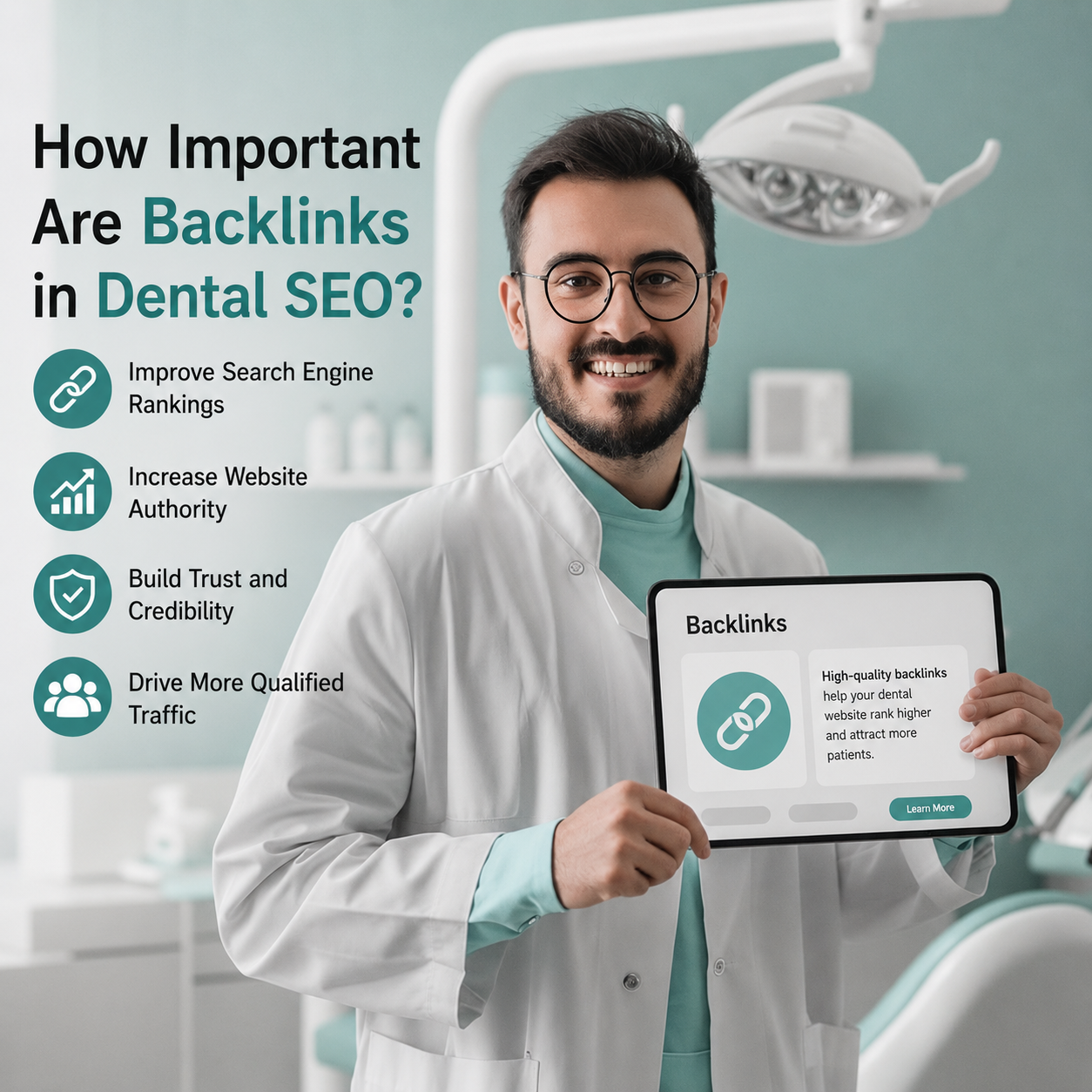
    How Important Are Backlinks in Dental SEO?

    In today’s competitive digital landscape, simply having a well-designed dental website is no longer enough to attract new patients. Dental practices must actively work to improve their online visibility so they can appear when potential patients search for services like teeth cleaning, dental implants, or emergency dentistry. This is where dental SEO becomes crucial—and at the heart of effective SEO lies one powerful factor: backlinks.

    Backlinks play a defining role in how search engines evaluate your website’s credibility, authority, and relevance. For dental practices, earning high-quality backlinks can be the difference between ranking on the first page of Google or getting lost among countless competitors. In this in-depth guide, we’ll explore how backlinks impact dental SEO, why they matter so much, and how dentists can build them ethically and effectively.

    Understanding Backlinks and Their Role in SEO

    A backlink is a link from one website to another. In simple terms, it’s like a vote of confidence. When a reputable website links to your dental website, search engines interpret it as a signal that your content is valuable and trustworthy.

    Search engines such as Google use backlinks as one of their top ranking factors. While on-page SEO elements like keywords and content quality are essential, backlinks help search engines decide how authoritative your site is compared to others in the same niche.

    For dental practices, backlinks tell search engines that your website is a reliable source of dental information or services, helping improve rankings for competitive keywords related to dentistry.

    Why Backlinks Are Especially Important for Dental SEO

    Dental SEO is a highly competitive space. In most cities, dozens—if not hundreds—of dental clinics are competing for the same local keywords. Backlinks help dental websites stand out in several key ways:

    Improved Search Engine Rankings

    Backlinks from authoritative and relevant websites boost your domain authority. The stronger your backlink profile, the higher your chances of ranking for important dental keywords.

    Increased Trust and Credibility

    When respected healthcare blogs, local directories, or dental associations link to your website, potential patients are more likely to trust your practice.

    Faster Indexing by Search Engines

    Search engine bots discover new content through links. Backlinks help your pages get indexed more quickly, especially when they come from frequently crawled websites.

    Referral Traffic

    Beyond SEO, backlinks can bring in direct traffic from users who click on the links. A backlink from a local health blog or community website can lead to highly targeted visitors who are genuinely interested in dental services.

    Quality vs. Quantity: What Matters More?

    Not all backlinks are created equal. In the past, websites could rank by building a large number of low-quality links. Today, search engines are much smarter.

    High-Quality Backlinks

    These come from:

    • Dental or healthcare-related websites
    • Local business directories with strong reputations
    • News websites or blogs
    • Educational or government domains

    High-quality backlinks are relevant, authoritative, and earned naturally.

    Low-Quality Backlinks

    These include:

    • Links from spammy websites
    • Paid or manipulated links
    • Irrelevant websites with no connection to dentistry

    Low-quality backlinks can harm your rankings and even lead to penalties. For dental SEO, a few strong backlinks are far more valuable than hundreds of weak ones.

    How Backlinks Support Local Dental SEO

    Local SEO is critical for dental practices because most patients search for dentists near them. Backlinks play a vital role in improving local search visibility.

    Local Citations and Directory Links

    Listings on platforms like local business directories, dental associations, and healthcare portals provide authoritative backlinks that strengthen local SEO signals.

    Community and Local Media Links

    Getting featured in local news, sponsoring community events, or contributing to local blogs can earn backlinks that improve both local relevance and authority.

    Google Maps and Local Pack Rankings

    While backlinks aren’t the only factor, they contribute to the overall authority of your site, which can positively influence your visibility in local map results.

    Content-Driven Backlink Strategies for Dental Websites

    One of the most sustainable ways to earn backlinks is through high-quality content. When your content provides value, other websites naturally want to link to it.

    Educational Blog Posts

    Writing informative blogs about dental procedures, oral health tips, or common patient concerns positions your practice as an expert resource.

    Research and Data

    Original studies, surveys, or statistics related to dental care are highly linkable assets that other websites may reference.

    Visual Content

    Infographics explaining dental processes or oral hygiene tips are often shared and linked to by blogs and social media platforms.

    Guest Blogging

    Contributing guest posts to dental or healthcare websites allows you to earn relevant backlinks while expanding your reach.

    Ethical Link Building: What Dentists Should Avoid

    While backlinks are powerful, unethical practices can do more harm than good.

    Avoid:

    • Buying backlinks from link farms
    • Participating in link exchange schemes
    • Using automated backlink tools
    • Spamming blog comments or forums

    Search engines penalize manipulative tactics, and recovering from a penalty can take months. Ethical, white-hat strategies are always the best approach for long-term success.

    The Role of Professional Help in Building Backlinks

    Building a strong backlink profile requires time, expertise, and consistency. Many dentists choose to work with experts who understand both SEO and the dental industry. Professional Dental SEO Services focus on creating tailored backlink strategies that align with search engine guidelines and business goals.

    Experienced SEO professionals can identify high-quality link opportunities, manage outreach campaigns, and ensure that backlinks come from relevant and trustworthy sources. This approach saves time and reduces the risk of harmful SEO practices.

    Measuring the Impact of Backlinks on Dental SEO

    To understand whether your backlink strategy is working, it’s important to track key metrics:

    Domain Authority: Indicates overall website strength

    Keyword Rankings: Shows improvement in search visibility

    Organic Traffic: Measures how many visitors come from search engines

    Referral Traffic: Tracks visitors coming directly from backlinks

    When combined with other SEO efforts, strong backlinks often lead to steady growth in online visibility and patient inquiries. Many comprehensive Dental SEO Services include backlink monitoring and performance reporting to ensure consistent progress.

    Backlinks and Patient Trust

    SEO isn’t just about search engines—it’s also about people. Backlinks from trusted healthcare platforms or local organizations build patient confidence before they even visit your clinic.

    When potential patients see your dental practice mentioned or linked by authoritative sources, it reinforces the perception that your clinic is reputable, professional, and reliable. This trust factor can significantly influence their decision to book an appointment.

    Long-Term Benefits of a Strong Backlink Profile

    Backlinks provide long-lasting value when built correctly. Unlike paid ads that stop delivering results once the budget runs out, quality backlinks continue to support your SEO efforts over time.

    A well-maintained backlink profile:

    • Protects your website from ranking fluctuations
    • Supports new content rankings
    • Strengthens your online brand presence

    Many dentists rely on ongoing Dental SEO Services to maintain and grow their backlink profiles as competition increases.

    Conclusion: Are Backlinks Worth the Effort in Dental SEO?

    The answer is a resounding yes. Backlinks remain one of the most important ranking factors in dental SEO. They help search engines understand your website’s authority, improve local and organic rankings, drive referral traffic, and build patient trust.

    While backlinks alone won’t guarantee success, they are a foundational element of any effective dental SEO strategy. By focusing on quality, relevance, and ethical practices—and by leveraging professional Dental SEO Services when needed—dental practices can achieve sustainable online growth and attract more patients in an increasingly digital world.

  • Why Dental SEO Services Matter in Competitive Markets

    Why Dental SEO Services Matter in Competitive Markets

    The dental industry has become more competitive than ever. In almost every city, patients can choose from dozens of dental clinics offering similar treatments, comparable pricing, and modern facilities. In such crowded markets, simply having a website or a social media page is no longer enough. Patients now rely heavily on search engines to find, compare, and select dental providers. This is exactly why Dental SEO Services play a crucial role in helping practices stand out, attract new patients, and grow sustainably.

    This article explores why search engine optimization is essential for dental clinics operating in competitive environments and how it helps practices stay visible, relevant, and trusted online.

    The Shift in How Patients Find Dentists

    The way patients search for dental care has changed dramatically. Instead of relying on word-of-mouth alone, people now turn to Google to find nearby dentists, read reviews, and compare services before making an appointment. Searches like “dentist near me” or “best dental clinic” have become the starting point of the patient journey.

    In competitive markets, dozens of clinics may target the same audience. If your practice does not appear on the first page of search results, there is a high chance potential patients will never discover you. SEO ensures your practice is visible at the exact moment someone is actively searching for dental services.

    Competition Makes Visibility a Priority

    In less competitive areas, a basic online presence may be enough to attract patients. However, in busy urban locations or regions with a high number of dental practices, competition for attention is intense. Clinics are constantly investing in advertising, promotions, and online marketing to win patient trust.

    This is where Dental SEO Services make a measurable difference. SEO focuses on organic visibility, helping your clinic appear in relevant searches without relying solely on paid ads. In crowded markets, consistent organic visibility builds long-term credibility and ensures your practice remains discoverable even when advertising budgets fluctuate.

    Local Search Is the Battleground

    Most dental searches are local in nature. Patients typically look for clinics close to their home or workplace. Google responds by showing local search results and map listings, making local SEO one of the most powerful tools for dental practices.

    Optimizing for local search involves more than just adding your address online. It includes accurate business listings, localized content, and strong signals that tell search engines your clinic is relevant to a specific area. In competitive markets, small improvements in local SEO can result in significant gains in visibility and patient inquiries.

    Building Trust Through Search Rankings

    Patients often associate high search rankings with credibility and trust. When a dental clinic consistently appears at the top of search results, it creates a perception of authority and professionalism—even before a patient visits the website.

    SEO helps build this trust by improving content quality, website structure, and online reputation. Reviews, informative content, and clear service pages all contribute to a stronger digital presence. Over time, this trust translates into higher engagement, more inquiries, and increased appointment bookings.

    Targeting the Right Audience, Not Just More Traffic

    One of the biggest advantages of SEO is its ability to attract high-intent traffic. Unlike general advertising, SEO focuses on users who are already searching for dental services. This means the visitors reaching your website are more likely to become patients.

    Professional Dental SEO Services focus on targeting relevant keywords and search intent, ensuring your practice attracts users who are actively looking for dental care. In competitive markets, this targeted approach prevents wasted effort and helps clinics connect with patients who are ready to book.

    Standing Out with Quality Content

    In competitive regions, many dental websites look similar and offer limited information. SEO-driven content helps your practice stand out by providing valuable, patient-focused information. Educational blog posts, service explanations, and FAQs not only improve search rankings but also address patient concerns.

    High-quality content demonstrates expertise and reassures patients about their choice. When people find clear, helpful answers on your website, they are more likely to trust your practice over competitors with minimal or outdated content.

    Long-Term Growth Without Constant Ad Spend

    Paid advertising can generate quick results, but it stops working as soon as the budget runs out. SEO, on the other hand, is a long-term strategy that builds sustainable visibility over time.

    In competitive markets, relying solely on ads can be expensive and unpredictable. SEO creates a strong foundation that continues to attract traffic and leads even during slower periods. This makes Dental SEO Services a cost-effective solution for clinics looking to grow steadily without depending entirely on paid campaigns.

    Adapting to Search Engine Changes

    Search engines constantly update their algorithms to improve user experience. What works today may not work tomorrow. Dental practices that ignore SEO risk falling behind competitors who adapt to these changes.

    SEO professionals monitor trends, update strategies, and ensure websites remain compliant with best practices. This adaptability is especially important in competitive markets, where even small ranking drops can lead to lost visibility and fewer patient inquiries.

    Enhancing the Patient Experience Online

    SEO is not just about rankings; it’s also about improving user experience. A well-optimized website loads quickly, works smoothly on mobile devices, and provides clear navigation. These factors matter to both search engines and users.

    Patients are more likely to contact a clinic if the website is easy to use and provides relevant information. SEO helps align technical performance with patient expectations, increasing the chances of conversion once users reach your site.

    Gaining an Edge Over Competitors

    In highly competitive markets, many clinics offer similar services and pricing. SEO allows you to differentiate your practice by highlighting unique strengths, specialties, and patient-focused values.

    Strategic optimization ensures your clinic appears for searches that matter most to your target audience. Over time, this consistent presence creates a competitive advantage that is difficult for others to replicate without a strong SEO strategy.

    Measuring Results and Refining Strategy

    Another key benefit of SEO is its measurability. Performance data such as traffic, rankings, and user behavior provides valuable insights into what’s working and what needs improvement.

    Experienced SEO teams use this data to refine strategies and improve results continuously. In competitive markets, this ongoing optimization ensures your practice stays ahead rather than reacting too late to changes.

    Final Thoughts

    In today’s crowded dental landscape, visibility, trust, and relevance are essential for success. Patients rely on search engines to guide their choices, and clinics that fail to invest in SEO risk being overshadowed by competitors.

    By focusing on long-term visibility, local relevance, and patient-focused content, Dental SEO Services help practices thrive even in the most competitive markets. They provide a sustainable way to attract high-quality leads, build credibility, and support consistent growth. For dental clinics looking to secure their place in a crowded industry, SEO is no longer optional—it is a vital part of staying competitive and successful.